The Indiana County Conservation District (ICCD) sponsored construction of a new passive treatment system, which was completed in October 2024, on the abandoned Lucerne 3A mine discharge. This discharge is located along Two Lick Creek directly downstream of the Two Lick Reservoir. When it exits the reservoir, Two Lick Creek is of very good quality and maintains a temperature necessary to sustain a cold-water fishery, due in part to the influence of the reservoir. Treatment of the Lucerne 3A discharge is therefore quite important for the health of this cold-water fishery.
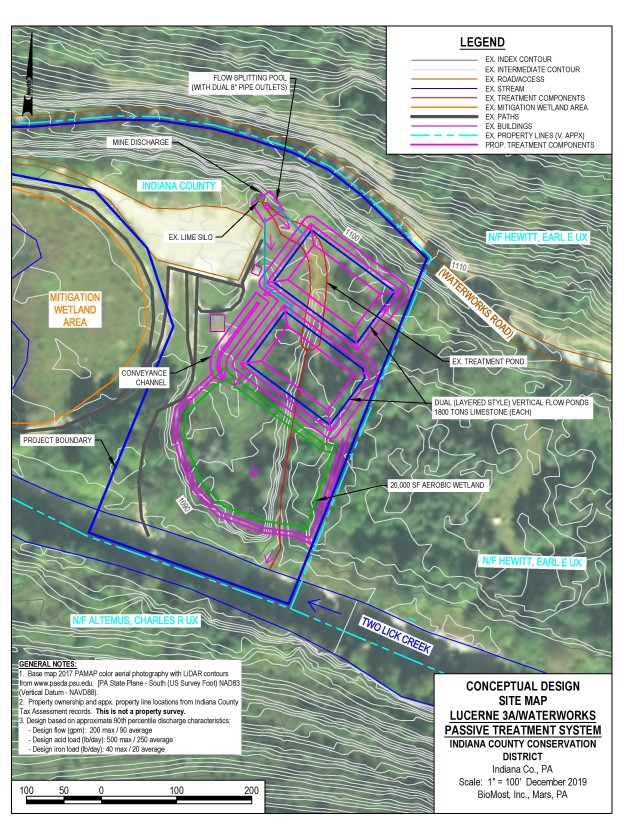
The discharge flow is equally split between two vertical flow ponds (VFPs), which are designed to neutralize acidity, impart alkalinity and remove metals from the discharge. The VFPs discharge into an anerobic wetland, which facilitates settling of additional metals. The discharge exits the wetland through a limestone channel, which imparts some additional alkalinity before the discharge enters Two Lick Creek.
The system was designed to treat an average flow of 89 gpm and a maximum of 150 gpm. It is estimated that the system will remove an average of 250 pounds per day of acidity, 20 pounds per day of iron and 18 pounds per day of aluminum that would otherwise enter the stream. At maximum design flow those pollutant-removal rates become 328 pounds per day of acidity, 40 pounds per day of iron and 20 pounds per day of aluminum.
Those providing funding for the project were: PA DEP Growing Greener Plus Grant Program; U.S. OSM WCAP; Foundation for PA Watersheds; Ken-Sink Chapter of Trout Unlimited. The total cost of the project was $663, 292.65.
BioMost, Inc. provided Engineering Services and EartShapers, LLC constructed the system.
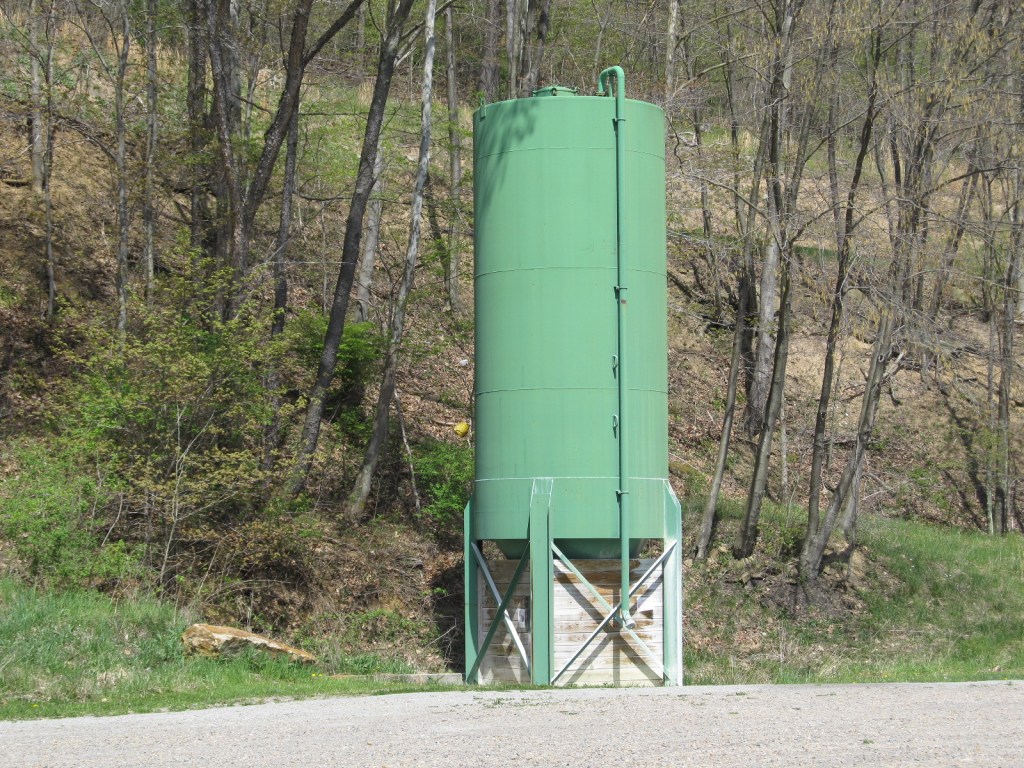
The new system replaces one sponsored by ICCD in 2011 that treated the Lucerne 3A discharge with an automatic lime dosing silo using Growing Greener funds. While that system provided some treatment of the discharge for about eight years, it became apparent that maintenance difficulties and lime costs made long-term use of the dosing system unfeasible. ICCD received engineering assistance from Stream Restoration, Inc., to evaluate the site, which led to the conclusion that the passive system completed in 2024 was the most viable alternative. The Pennsylvania Department of Conservation and Natural Resources also provided funding for the 2011 project, which supported the creation of a small public park on the site.
 Blacklick Creek Watershed Association